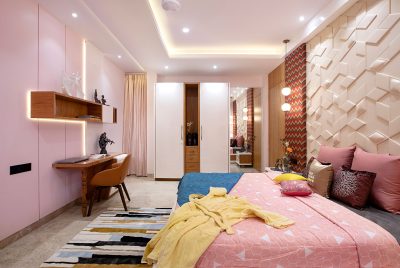
Styling Tips For Nursery Corner In Parents Bedroom
We may earn a commission for purchases made using our links. Please see our disclosure for more details.
A separate nursery sounds lovely until you look around your bedroom and wonder where another piece of furniture could possibly fit. Creating a Nursery Corner In Parents Bedroom solves that problem without turning your sleeping space into a storage room for baby gear.
The trick is deciding what actually belongs beside your bed. Your baby needs a suitable place to sleep, while you need space to move, rest, and handle those middle-of-the-night diaper changes.
From choosing a bassinet to organizing small essentials, these nursery corner ideas will help you build a comfortable, attractive setup that works in everyday life. You can start with what you already own and add only what the space genuinely needs.
Start With One Clearly Defined Nursery Zone
Give the baby area a visual boundary, even if it occupies only one side of the bed. A crib against a clear stretch of wall, with a small organizer nearby, is often enough to make the arrangement feel deliberate.
Tall screens can crowd the walkway, and hanging curtains create extra fabric and hardware near the sleep area. Instead, distinguish the corner with a subtle wall color, a framed print placed safely away from the crib, or coordinating furniture finishes.
Choose a Nursery Corner In Parents Bedroom That Makes Sense
The most convenient spot is usually near your bed, but convenience should never mean placing a crib beneath a window or next to hanging cords. Check for curtain pulls, electrical outlets, heaters, and furniture that could tip or drop objects.
Can you navigate it in low light without stepping around crib legs or baskets? Can both adults get out of bed comfortably?
If the only available corner is awkward, rearranging a nightstand may solve more problems than buying smaller baby furniture.
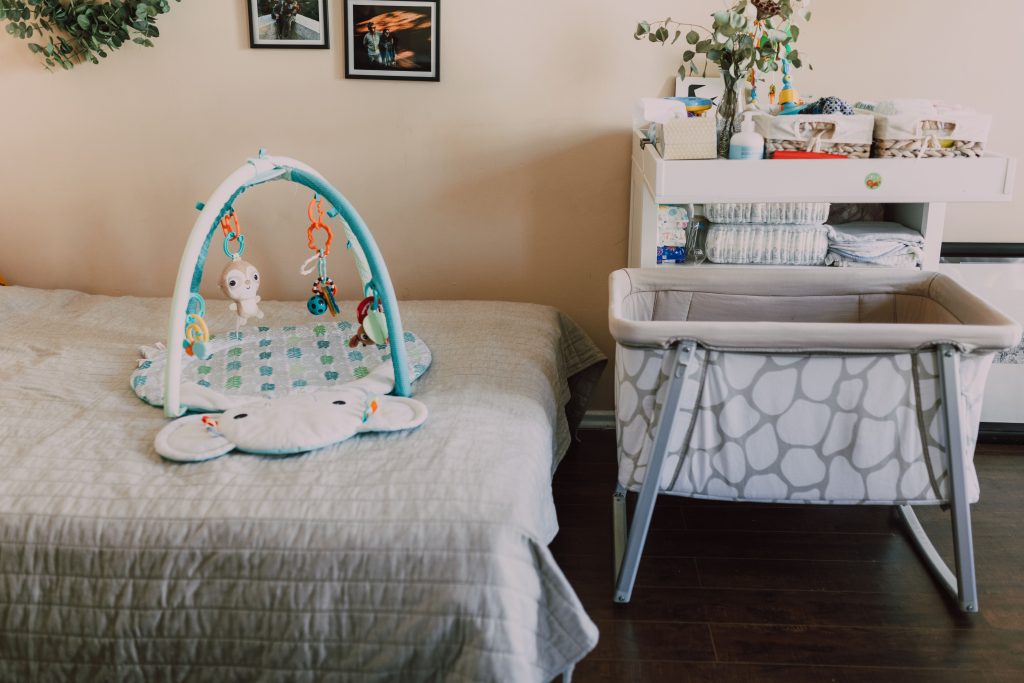
Measure the Space Before Choosing Furniture
Measure the actual floor area, including baseboards, door swings, and anything that projects from the bed frame.
Use painter’s tape to mark the footprint of each possible sleep space. Then open drawers, pull out under-bed storage, and try passing through the remaining walkway.
Also check whether the sleep product fits the height and clearance of your adult bed.
Pick a Color Palette That Belongs in Your Bedroom
A shared bedroom looks calmer when the nursery colors connect with the adult furniture. If your bedroom has warm wood, cream bedding, and brass accents, consider oatmeal, sage, or muted terracotta rather than introducing several unrelated pastels.
Try using one main neutral and one gentle accent color. Repeat the accent on a storage basket, wall print, or nearby dresser accessory, keeping all decorative pieces outside the infant sleep space.
Decide Between a Bassinet, Mini Crib, and Play Yard
A bassinet offers bedside convenience during the newborn stage, but babies outgrow these products according to the manufacturer’s developmental and size limits.
A mini crib generally lasts longer, although it needs a correctly fitted mattress and sufficient space for its fixed frame. A play yard approved for infant sleep can suit families who also need something portable.
Choose based on usable floor space and how long you expect to room-share, not simply which option photographs best. Whichever you pick, follow its instructions and use only the mattress and bedding permitted by the manufacturer.
Make the Corner Feel Cozy Without Filling the Crib
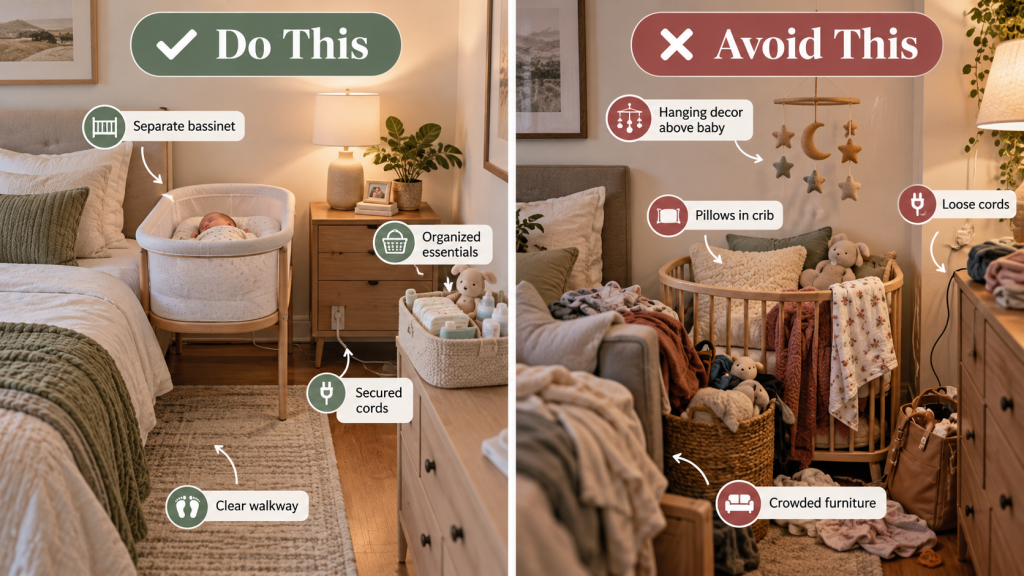
Softness belongs around the nursery, not inside the baby’s sleep area. Keep pillows, blankets, stuffed animals, padded bumpers, and decorative nests out of the crib or bassinet.
You can still create a welcoming look through adult bedding, a washable floor rug away from the crib’s moving parts, and the natural texture of wood furniture.
For more inspiration on layering texture and color, explore these cozy guest bedroom ideas, then adapt the adult-room styling while keeping infant sleep rules separate.
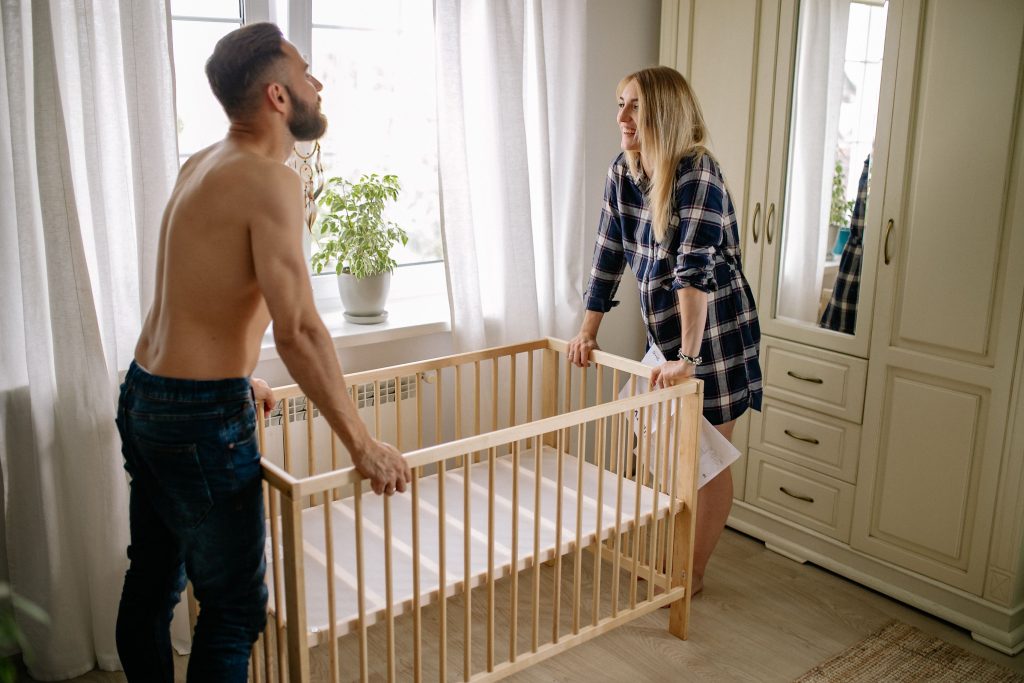
Store Baby Essentials Without Crowding the Floor
A spare dresser drawer can hold pajamas, sheets, and burp cloths, while small dividers stop everything mixing together.
Wall hooks may be useful for an adult’s robe or diaper bag, but install them well away from the baby’s sleeping area and future reach. Avoid floating shelves, framed glass, heavy decorations, and hanging organizers directly over the crib.
Put frequently used supplies in a portable caddy on a stable surface.
Build a Changing Station Without Adding a Large Table
A dedicated changing table is optional. A portable changing mat and a caddy can handle the job if you have a suitable, stable place to change your baby while maintaining constant hands-on supervision.
If you use a dresser with a compatible changing setup, follow the changing pad and furniture manufacturers’ instructions. Never leave a baby unattended on an elevated surface, even for a moment.
Keep fresh diapers, wipes, a change of clothes, and a disposal bag close together. Put creams and other supplies away after use, beyond a child’s reach.
Layer Gentle Lighting for Nighttime Care
Overhead lighting can feel harsh at 2 a.m. A dimmable lamp or nightlight allows you to see what you are doing without lighting the whole bedroom. Choose a setup you can operate one-handed, and keep cables secured away from the crib.
A plug-in sound-and-light device can replace two separate accessories, but it still needs a safe location and sensible settings.
Make Small-Space Decor Easy to Clean and Change
Choose finishes you can wipe down and organizers that are easy to empty. Washable rugs are useful, provided they lie flat and do not interfere with furniture stability.
Keep the visual styling simple: perhaps one framed botanical print on a different wall, a woven-look basket, and matching containers.
As your baby becomes mobile, reconsider whatever sits at grabbing height. A decoration that looks harmless during the newborn months may need moving once pulling, reaching, and climbing begin.
Avoid Common Nursery Layout and Safety Mistakes
Oversized chairs, extra dressers, and decorative ladders can block exits or create climbing hazards.
Keep infant sleep furniture away from window coverings, heaters, lamps, and dangling electrical cords. Anchor dressers and bookcases properly, and check that nothing can fall into the sleep space. Do not hang canopies, string lights, or fabric garlands over the crib.
Finally, leave the infant mattress firm, flat, and bare except for a tightly fitted sheet. Styling is flexible; these sleep precautions are not.
Recommended Products for a Nursery Corner In Parents Bedroom
These five pieces serve different needs. Most families will choose one sleep surface, then add only the accessories that suit their available space.
Dream On Me Aden 4-in-1 Convertible Mini Crib, Grey
Best for: Parents wanting a compact crib with longer-term use.
Made from New Zealand pine, the Aden has a narrow footprint and three mattress support positions. Its simple slatted design works with several bedroom styles, and conversion options extend its use beyond the crib stage. Check the exact mattress fit and account for separately sold conversion parts before deciding it suits your corner.
Chicco LullaGo Anywhere Portable Bassinet – Lyric
Best for: Small bedrooms and portable newborn sleeping arrangements.
The Chicco LullaGo Anywhere features a compact design with mesh sides, a firm, flat mattress, and removable, machine-washable fabrics. Its lightweight frame and foldable construction make it convenient for moving between rooms or traveling. The neutral beige finish complements most bedroom styles. However, it lacks adjustable height settings and must be retired when your baby reaches the manufacturer’s developmental or weight limit.
Parker Baby Co. Felt Diaper Caddy Organizer, Regular, Oatmeal
Best for: Keeping everyday changing supplies in one portable place.
This soft-sided felt caddy has carry handles, a removable divider, and exterior pockets for smaller items. The oatmeal finish blends easily into neutral bedrooms, while the regular size avoids an oversized storage basket. It is not rigid furniture, so place it on a stable surface rather than balancing it on a crib rail.
Skip Hop Pronto Signature Portable Changing Mat, Heather Grey
Best for: Diaper changes without a dedicated changing table.
The Pronto folds into a compact clutch and opens into a wipe-clean changing pad, with pockets for diapers and essentials. Its portable design makes it useful when changing locations around the house. Use it on a safe, stable changing surface; the mat does not replace close supervision or make elevated furniture fall-proof.
Hatch Baby Sound Machine & Night Light Routine Builder (Putty)
Best for: Combining dim lighting and optional background sound.
Hatch Baby combines a nightlight, soothing sounds, and programmable favorites in one device. Its large top button and separate brightness controls make nighttime adjustments manageable without juggling several accessories. Initial setup requires Wi-Fi and the Hatch Sleep app, and some guidance content may require a subscription. Keep the cord far from the crib and the sound at a modest volume.
What Safe-Sleep Research Means for Your Nursery Layout
The American Academy of Pediatrics’ 2022 evidence review on safe infant sleep supports keeping an infant’s separate sleep space in the parents’ room, ideally for at least the first six months. The evidence associates room sharing without bed sharing with a substantially lower risk of sudden infant death syndrome; it does not suggest that particular nursery colors or decorations improve safety.
The CDC’s safe-sleep guidance recommends placing babies on their backs on a firm, flat sleep surface, without pillows, blankets, or soft toys. That makes an uncluttered crib a deliberate design choice, not an unfinished one.
The Consumer Product Safety Commission’s window-cord guidance also recommends cordless coverings and keeping cribs away from windows. These recommendations matter more than the appearance of any nursery accessory.
Frequently Asked Questions About a Nursery Corner in Parents Bedroom
How much space do I need for a nursery corner?
You need enough room for a suitable infant sleep product and safe access around it, rather than a fixed number of square feet. Measure the full footprint, including legs, and test your walking route. If adding a changing table blocks a drawer or doorway, keep changing supplies portable instead.
Can I decorate the wall above a baby’s crib?
It is better to leave the area directly over the crib free of shelves, heavy frames, mirrors, and hanging decorations that could fall or become reachable. Add artwork on an adjacent wall instead. If you use paint or wallpaper, follow installation directions and make sure the finished surface is secure.
Is it necessary to have both a bassinet and a mini crib?
No. One appropriate sleep space is enough at a time. A bassinet can make early bedside care convenient, while a mini crib may reduce the need to switch furniture soon. Choose a product that fits your room and your baby’s current size and developmental stage, and follow its specific limits.
Can I create a nursery corner in a rental bedroom?
Yes. Start with freestanding, compact furniture and removable storage inserts. A coordinated caddy, bedding on the adult bed, and one piece of safely placed artwork can create a distinct look without major alterations. Follow your lease and use appropriate anchors where furniture requires them; renter-friendly should never mean skipping tip-over protection.
When should I move the baby into a separate nursery?
The AAP advises keeping your baby in the same room but in a separate sleep space, ideally for at least the first six months. The timing after that depends on your family’s situation and your child’s sleep needs. A bassinet may be outgrown sooner than six months, so plan for an appropriate crib or play yard if you continue sharing the bedroom.
Conclusion: Create a Corner That Works for Your Family
A successful Nursery Corner In Parents Bedroom begins with a safe sleep space and a layout you can navigate comfortably at night. Choose the bassinet, mini crib, or play yard that fits your room, then organize the essentials nearby without crowding the floor.
For a longer-lasting furniture option, the Dream On Me Aden mini crib is worth considering. If easy newborn bedside access matters more, compare the HALO BassiNest’s footprint with your available space. A simple diaper caddy and soft, coordinated colors can finish the corner without much extra furniture.
Keep decorative details outside the baby’s sleep area, and be ready to adjust the arrangement as your child grows. The best setup is the one that feels comfortable for the adults while giving the baby a separate, uncluttered place to sleep.