Colonial Home Style: A Practical Guide to Timeless, Livable Rooms

We may earn a commission for purchases made using our links. Please see our disclosure for more details.
Colonial interiors can be beautiful, but they are easy to misread. Add too much dark wood and brass, and the room starts feeling like a movie set. Strip away every traditional detail, and the character disappears. The goal of colonial home style is not to recreate a museum. It is to borrow the balance, craftsmanship, natural materials, and orderly comfort associated with historic homes, then adapt them to the way you live now. This guide will help you understand the style’s defining features, choose colors, layer patterns, update rooms, and compare decor products. You will also learn where historical accuracy matters, where flexibility works, and how to make thoughtful updates without creating a theme.
Affiliate disclosure: We may earn a commission from qualifying purchases made through links in this article, at no additional cost to you.
What Colonial Home Style Really Means
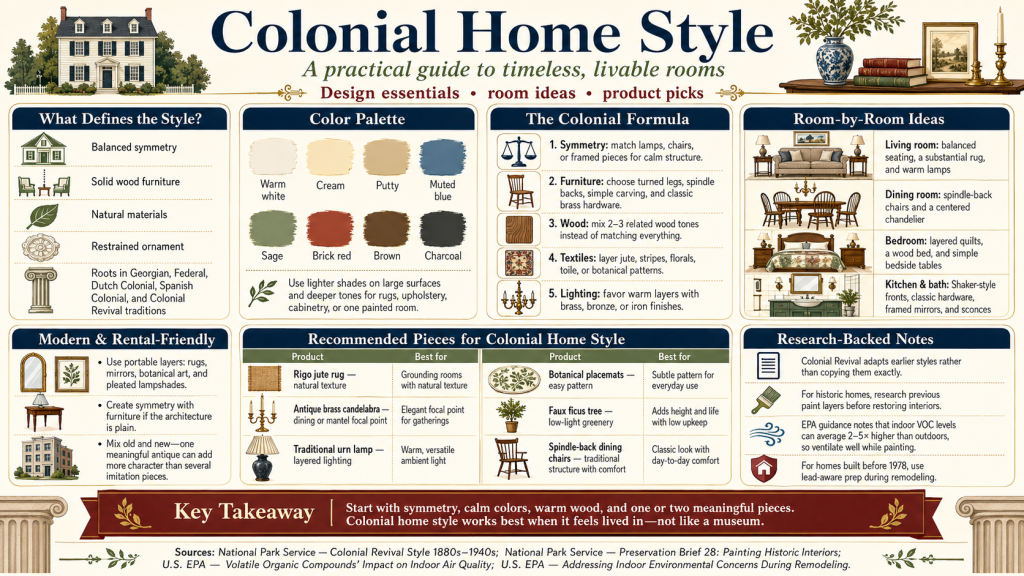
Colonial home style draws from Georgian, Federal, Dutch Colonial, Spanish Colonial, and later Colonial Revival traditions. Although distinct, they often share symmetry, practical layouts, solid wood furniture, and restrained ornament.
For modern homes, Colonial Revival is a flexible reference because it suggests earlier architecture rather than copying it literally. Your room can include a tailored sofa, modern conveniences, and family photos while still feeling rooted in history.
Start with a Calm, Historically Inspired Color Palette
Begin with warm white, cream, putty, muted blue, sage, brick red, brown, and charcoal. These settled colors help traditional furniture and trim stand out.
Use lighter shades across large surfaces, then bring deeper tones into cabinetry, upholstery, rugs, or one painted room. A navy dining room can feel cocooning; navy everywhere may feel relentless. Colonial home style needs rhythm rather than uniformity.
Build the Look Around Symmetry
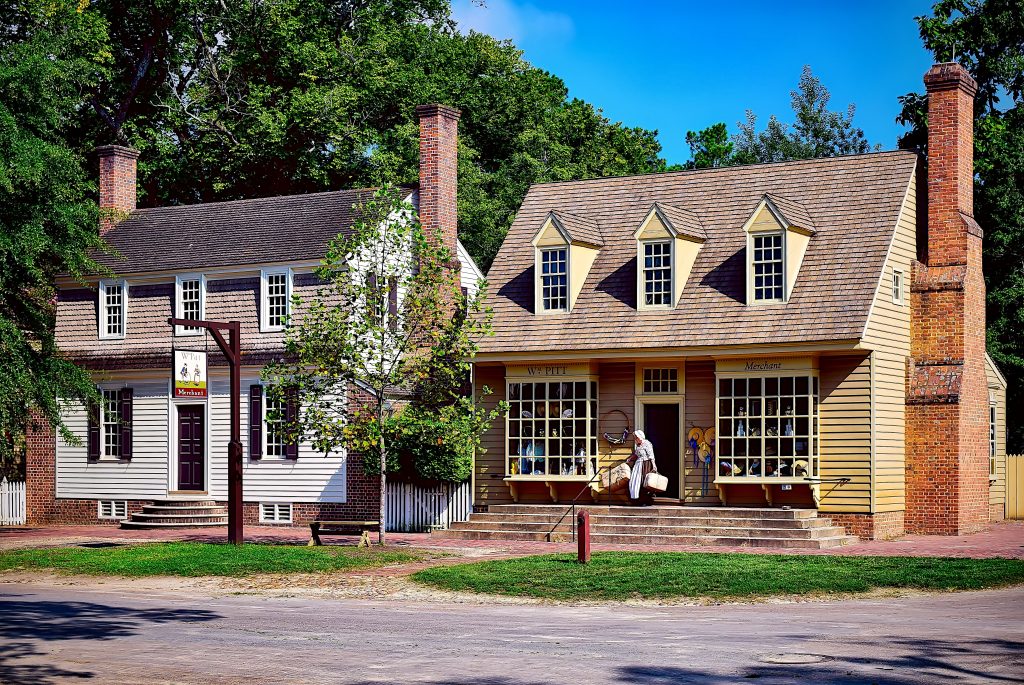
Symmetry quickly creates a colonial feeling. Place matching lamps on a console, balance two chairs across from a sofa, or center artwork above a mantel. The arrangement feels calm because your eye understands it.
However, do not mirror every object. A book stack, leafy branch, or inherited bowl loosens the formality. Think of symmetry as the room’s skeleton; personal objects provide movement and warmth.
Choose Furniture with Quiet Structure
Look for turned legs, spindle backs, gentle curves, simple carving, framed drawers, or restrained brass hardware. Windsor chairs, gateleg tables, four-poster beds, and writing desks support colonial home style without requiring a complete overhaul.
Scale matters more than pedigree. A massive reproduction armoire can overwhelm a small room, while one proportionate chest may anchor it. Measure doorways and walking paths before buying.
Use Wood Without Making Rooms Feel Heavy
Mahogany, walnut, cherry, maple, oak, and pine suit colonial-inspired interiors. Matching every finish, however, can make a room look purchased as a set. Mix two or three related wood tones instead.
Balance dark furniture with pale walls, woven rugs, linen curtains, and reflective accents. Before refinishing orange or glossy wood, try cooler wall color and softer lighting; the surroundings may be the real problem.
Layer Rugs, Curtains, and Traditional Patterns
Textiles keep structured rooms comfortable. Try a jute or sisal foundation, then add a smaller patterned rug where softness matters. Plaids, ticking stripes, small florals, toile, and botanical motifs can all fit.
Choose one leading pattern and let the others support it. Floral curtains, a quiet stripe, and solid upholstery give colonial home style depth without making the room feel busy or overcoordinated.
Shape the Mood with Brass and Warm Lighting
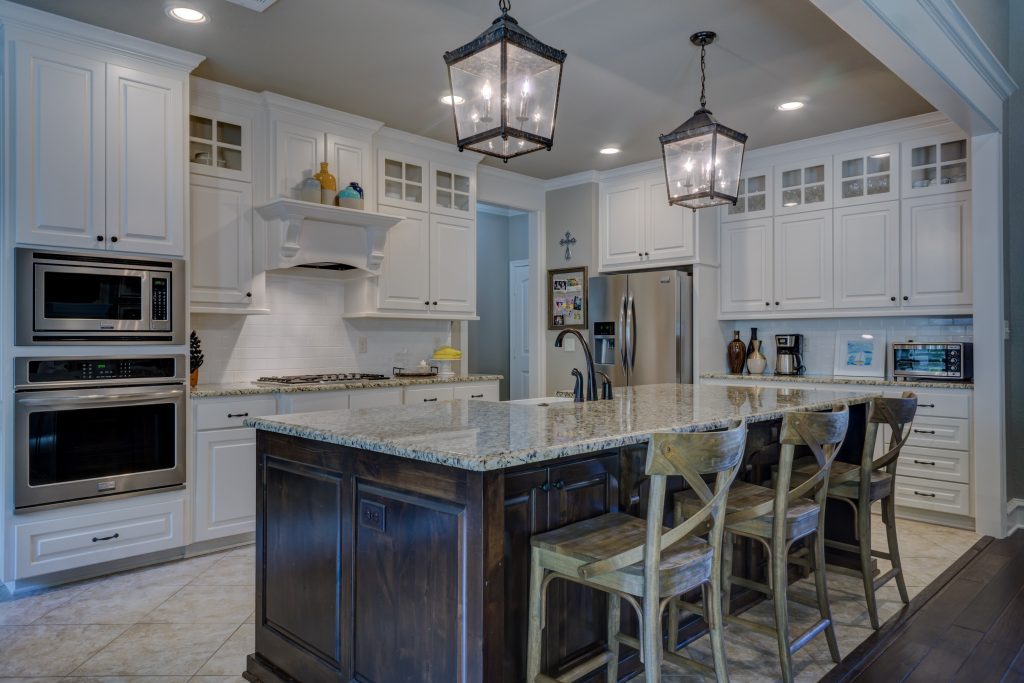
Layer a central fixture with table lamps, wall lights, and candles or flameless tapers. Aged brass, bronze, and iron reinforce the style without matching exactly.
Proportion still matters. A petite lamp disappears beside a tall secretary desk, while an oversized chandelier crowds a low ceiling. Linen, parchment, pleated fabric, and simple glass shades soften light and suit colonial home style.
Style Walls with Art, Mirrors, and Architectural Detail
A framed map, landscape, portrait, botanical print, quilt, or antique-style mirror often makes a stronger impression than a packed gallery wall.
If your home lacks molding, add structure with painted trim, a picture rail, or simple panel molding. Renters can frame textile panels or use removable wallpaper inside one niche. Leave generous spacing around dark frames so each object can breathe.
Bring Colonial Home Style into Every Room
Living rooms need balanced seating, a substantial rug, and warm lamps. Dining rooms suit spindle-back chairs, botanical linens, and a centered chandelier. Bedrooms benefit from layered quilts, a wood bed, and simple bedside tables.
Kitchens need not become historical reproductions. Shaker-style fronts, ceramic crocks, wood boards, and aged-metal hardware add enough character. In bathrooms, try a framed mirror and classic sconces.
Adapt the Look for Apartments and Rentals
Renters can build colonial home style through portable layers: a traditional rug, wood-framed mirror, pleated lampshade, botanical art, and one vintage or reproduction table.
Use furniture to create symmetry when architecture cannot. Two narrow bookcases can frame a sofa, while matching plug-in sconces define a bed. Prioritize pieces you can carry to your next home rather than funding temporary alterations.
Mix Old and New Without Losing Character
Pair a clean-lined sofa with a turned-leg table, modern ceramics with an old cabinet, or contemporary art above a traditional chest. Repeating one wood tone, metal finish, or color ties the contrast together.
When shopping for genuine age, this guide to antique home decor can help you assess craftsmanship, condition, and placement. One meaningful antique usually contributes more character than several imitation curios.
Recommended Products for Colonial Home Style
These recommendations cover different rooms, budgets, and priorities. They are not meant to be purchased as a matching collection; choose the one piece that solves a real decorating need.
| Product | Best for | Watch for |
| Rigo rug | Natural texture | Fiber shedding |
| Metal candelabra | Table drama | Tall scale |
| Cardiff lamp | Layered light | Large footprint |
| Botanical placemats | Easy pattern | Wipe cleaning |
| Ficus tree | Low-light greenery | Floor space |
| Berringer chairs | Dining refresh | Pair format |
nuLOOM 4×6 Rigo Jute Hand Woven Area Rug, Natural, Solid Farmhouse Design, Natural Fiber, For Bedroom, Living Room, Dining Room, Hallway, Office, Kitchen, Entryway
Best for: Budget-friendly natural texture
This handwoven 100% jute rug adds a quiet, earthy foundation that works with dark furniture, cream walls, and patterned textiles. Its low 0.35-inch profile suits entryways and dining areas. Because jute can sprout or shed, it needs gentle vacuuming and is better for dry indoor rooms than spill-prone spaces.
Creative Co-Op Hand-Forged Metal Candelabra, Antique Brass Finish
Best for: A traditional mantel or dining-table focal point
The hand-forged metal body, hammered texture, and antique-brass finish give this candelabra the irregular character that polished modern accessories often lack. It holds three standard taper candles and stands 21.5 inches high, so it reads as a statement piece. Use flameless tapers where open flames would be impractical.
Cardiff 33″ Tall Table Lamp Iron Urn Night Light Bronze Rustic Traditional | Champagne Glass Lamp For Living Room Bedroom Bedside Nightstand House Reading Console Entryway Kitchen Dining Family
Best for: Layered lighting in a living room or entry
This traditional urn-style lamp combines a main light with an illuminated champagne-glass section, creating two levels of glow from one fixture. The bronze-toned iron and bell shade suit colonial home style, especially beside substantial wood furniture. At 33 inches tall, however, it needs a broad console or end table to look balanced.
Pimpernel Botanic Garden Placemats, Set of 6, 30.5 x 23cm
Best for: Adding botanical pattern without permanent changes
This set brings classic floral illustration to a dining table while keeping the rest of the room restrained. The six rectangular mats use a cork backing, which helps protect the tabletop during everyday meals. They are a practical choice for renters or cautious decorators, although they should be wiped clean rather than submerged in water.
Nearly Natural 6ft Triple Trunk Artificial Ficus Tree with Natural Wood Trunks, Fake Tree for Indoor Home Décor, Faux Ficus Tree with Black Nursery Pot
Best for: Greenery in low-light rooms
A tall ficus softens formal furniture and fills an empty corner without depending on window exposure or watering routines. This six-foot version uses natural wood trunks and a black nursery pot, so you can place it inside a basket or ceramic cachepot. Its height creates impact, but the broad canopy needs enough clearance.
Signature Design by Ashley Berringer | Spindle Back 18″ Dining Chairs (Set of 2) – Rustic Light Brown with Upholstered Cushioned Seat
Best for: Updating a colonial-inspired dining area
These chairs combine wood spindle backs, a rustic light-brown finish, and upholstered cushioned seats. That mix offers traditional structure with more comfort than a bare wood seat, making the pair suitable for regular family meals. The upholstery adds softness, though households wanting a strictly all-wood historical look may prefer a simpler Windsor chair.
Research-Backed Guidance for Authentic and Safer Updates
The National Park Service history of Colonial Revival architecture explains that the movement suggested earlier Georgian and Federal buildings rather than copying them exactly. That supports a flexible approach: preserve symmetry and classical restraint, but adapt them to modern layouts and comfort.
For a genuinely historic house, the NPS guide to painting historic interiors recommends researching previous paint layers before restoration. Color charts alone cannot prove what belonged in your particular home.
Health considerations matter too. The EPA’s 2026 VOC guidance notes that concentrations of several organic pollutants average two to five times higher indoors than outdoors. Ventilate while painting, follow labels, and do not assume “low VOC” describes every chemical risk. Homes built before 1978 also require lead-aware preparation under the EPA’s remodeling guidance.
Colonial Home Style FAQs
Can colonial home style work in a modern house?
Yes. Focus on transferable ideas rather than historical reconstruction: symmetry, warm wood, tailored furniture, natural fibers, and restrained patterns. Keep modern conveniences and cleaner silhouettes where they make daily life easier. A contemporary sofa can sit comfortably beside a spindle chair or antique chest when color, scale, and materials connect the pieces.
What colors work best for colonial interiors?
Warm white, cream, muted blue, sage, brick red, brown, and charcoal are dependable starting points. Choose colors according to your room’s natural light and existing wood tones rather than relying on a universal “historic” palette. Dark shades suit dining rooms, studies, and cabinetry, while lighter walls keep smaller spaces open.
Do I need antique furniture to create the look?
No. Reproductions, vintage pieces, and modern furniture can work together. Prioritize solid proportions, traditional details, and materials that age gracefully. One authentic antique may provide enough history for an entire room. Before buying, inspect stability, repairs, odors, finish condition, and whether the piece fits through your doors.
How do I keep colonial decor from looking dated?
Reduce literal symbols and increase contrast. Use fewer themed accessories, leave open space around displays, and mix traditional furniture with simple contemporary upholstery or artwork. Updated lighting, breathable curtains, and a lighter wall color can refresh heavy wood. The room should communicate continuity, not pretend that the last two centuries never happened.
Is colonial home style expensive to create?
It can be, but it does not have to be. Begin with paint, furniture arrangement, secondhand wood pieces, and a few functional accents. Rugs, lampshades, brass hardware, botanical prints, and table linens can shift the mood without renovation. Spend more on pieces that carry weight or receive daily use, such as chairs, lighting, and rugs.
Final Recommendation: Create a Colonial Home Style That Feels Lived In
Successful colonial home style begins with balance: orderly layouts, warm materials, practical furniture, and enough contrast to keep the room current. Start with the architecture and pieces you already own, then add one strong layer at a time. A nuLOOM Rigo rug can soften a room with dark furniture, while the Ashley Berringer chairs can give a dining area immediate structure.
Small-space renters should concentrate on portable lighting, art, textiles, and mirrors. Owners of historic houses should research original materials before stripping or repainting. Above all, choose objects that support daily life and carry personal meaning. The best final recommendation is simple: build a calm, useful home first, then let colonial details give it history and character.