Living Room Clocks: Buyer’s Guide and Picks
We may earn a commission for purchases made using our links. Please see our disclosure for more details.
If you’ve ever glanced at the wall and thought, “Something’s missing,” there’s a good chance it’s a clock. Living room clocks do more than tell time—they anchor a wall, balance your décor, and quietly set the mood. In this guide, you’ll learn how to pick the right size, style, and movement, where to hang it (so it looks intentional), and which popular Amazon picks are worth your money.
Heads-up: Some sections mention products. If you buy through links, I may earn a small commission at no extra cost to you.
Why Living Room Clocks Still Matter (Beyond Time)
A good wall clock is like a great host: present, helpful, and never loud about it. It fills visual space, creates rhythm on a gallery wall, and can tie together metals, woods, or colors you’re already using. And unlike purely decorative pieces, clocks feel useful—guests will actually check them.
You’ll also find living room clocks in every style: modern and minimal, mid-century, rustic farmhouse, and sleek digital. That means there’s a version that fits your space and your personality.
Quick Size Guide: What Diameter Fits Your Wall?
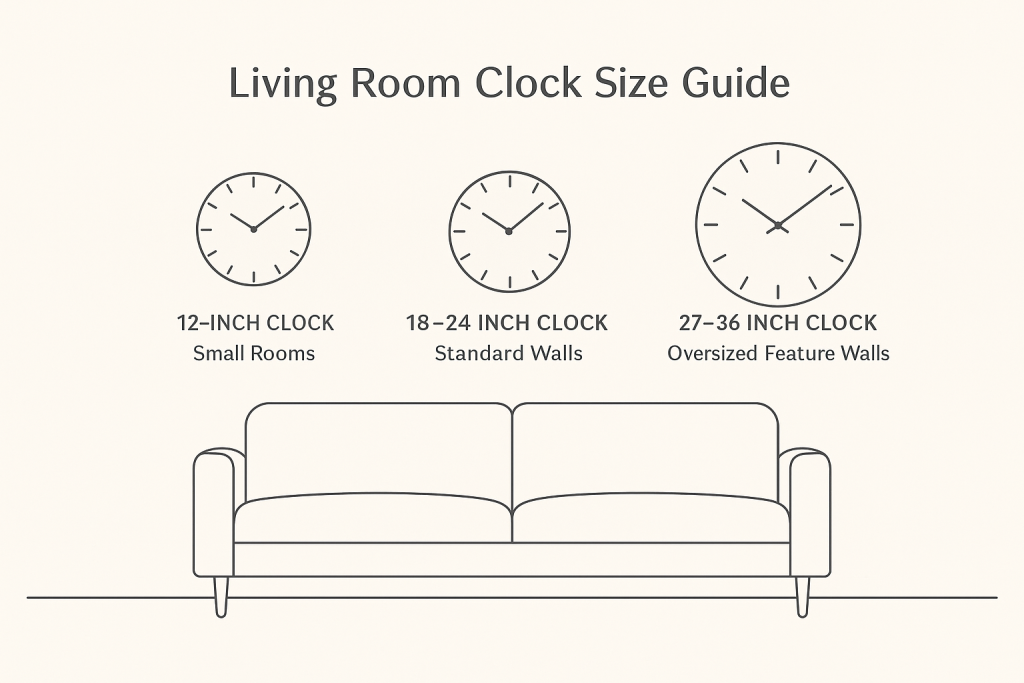
- Small rooms or narrow columns: 10–12 inches
- Standard walls above consoles/sofas: 18–24 inches
- Large feature walls: 27–36 inches (the “oversized wall clock” look)
- Tip: When in doubt, go a size up. Tiny clocks get visually “lost,” especially over a sofa.
Ask yourself: From my main seating spot, can I read the time without squinting?
Analog vs Digital: Which Feels Right for Your Space?
- Analog (quartz) gives warmth and décor flexibility. Roman numerals feel classic; minimalist markers feel modern.
- Digital reads fast from across the room and can add indoor/outdoor temperature and calendar—great for busy households and open-plan spaces.
If your room leans cozy, analog wins. If you want quick, glanceable info, try a digital wall clock or atomic model.
Silent vs Ticking: Noise Matters in Open-Plan Homes
Some clocks “tick”—charming for a study, distracting near a TV. Look for silent non-ticking or quiet sweep movements (the second hand glides smoothly). If your living room connects to the kitchen or nursery, prioritize silent.
Materials & Finishes: Wood, Metal, Glass, and More
- Wood warms up modern rooms and softens black/white palettes.
- Metal (brass, black, steel) reads crisp and contemporary.
- Glass covers reduce dust on the dial and read cleaner.
- Mixed materials (wood + metal) bridge farmhouse and modern décor.
Match your clock’s finish to nearby accents (lamp bases, frames, hardware) for cohesion.
Style Matches: Modern, Farmhouse, Mid-Century, Minimalist
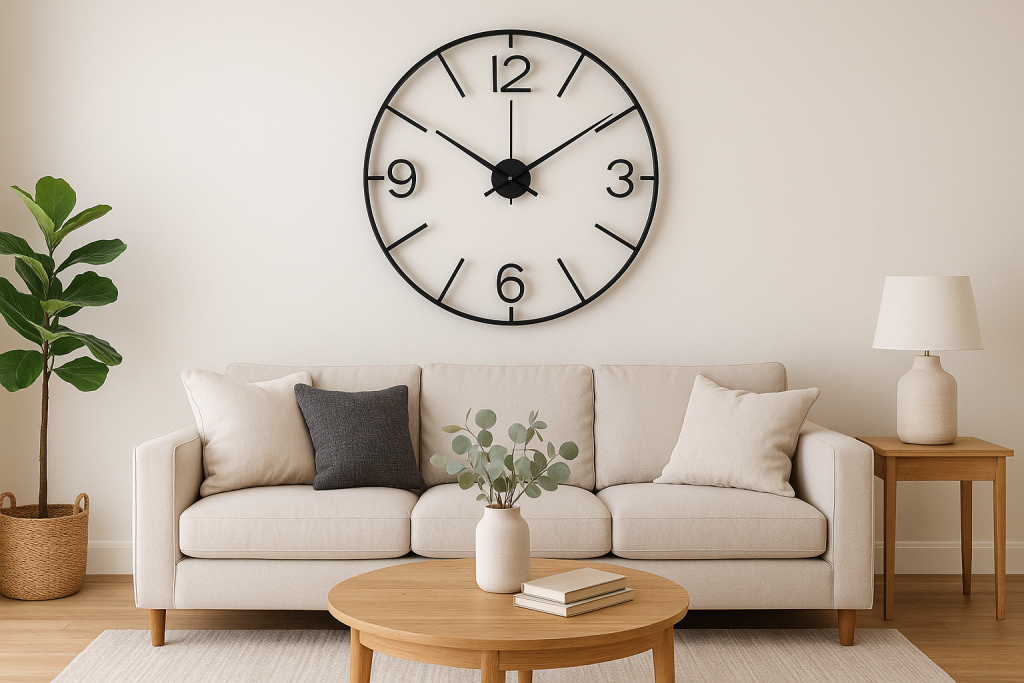
- Modern clock: slim markers, metal finishes, clean numerals.
- Farmhouse clock: oversized, plank/shiplap face, distressed numbers.
- Mid-century wall clock: warm woods, sunburst shapes, rounded forms.
- Minimalist: monochrome dials, simple hash marks, thin bezels.
Pick one style to strengthen your room’s “story,” or use the clock as a contrast piece (e.g., sleek metal clock in a rustic room).
Color & Contrast: Make It Pop (or Blend In)
- High contrast (light dial, dark numerals) = best readability.
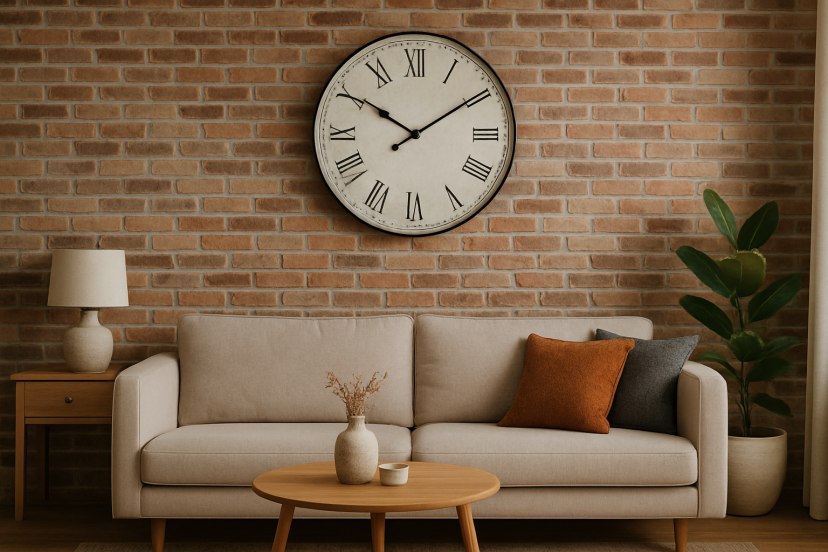
- If your wall is busy (brick, patterned wallpaper), choose a simpler dial.
- Want subtle? Match dial tone to wall color and let the hands do the talking.
Placement & Height: The Eye-Level Rule That Works
A reliable rule of thumb: center your clock around 57–60 inches from the floor—roughly average eye level—then adjust a bit for furniture height and sightlines. Designers commonly reference the “57-inch rule” as a gallery baseline, not a law, but a great starting point for a cohesive feel.
Above furniture: float the clock 8–10 inches above the top edge of a console or sofa back for balanced proportions.
Power & Movement: Quartz, Sweep, and Radio-Controlled
- Quartz (battery) is standard—accurate, low maintenance.
- Sweep/quiet sweep = smooth second hand, nearly silent.
- Radio-controlled (“atomic”) clocks auto-set via WWVB signals so you don’t fuss with daylight saving time. (The clocks receive time from an atomic standard; they’re not atomic clocks themselves.)
🧪 Research-Backed: Accuracy, Noise, and Calm Spaces
- Set-and-forget accuracy: NIST explains that “radio-controlled” clocks synchronize to WWVB, a time signal traceable to atomic standards—useful if you want accuracy without manual resets.
- Visual calm helps: A 2010 study linked cluttered home descriptions with higher stress patterns (measured by cortisol) across the day. Translation: a clear, well-scaled clock that reduces visual noise (rather than adding it) can support a calmer vibe.
Budget vs Premium: Where to Spend, Where to Save
- Spend on: size (oversized pieces cost more), durable frames, silent sweep movement.
- Save on: numerals vs markers (purely aesthetic), novelty features you won’t use.
- Hidden costs: batteries (AA vs AAA), remote sensors for digitals, mounting hardware.
Care & Maintenance: Batteries, Dust, and Sunlight
- Swap batteries proactively (set a calendar reminder twice a year).
- Dust the dial and hands with a soft microfiber cloth.
- Avoid direct sunlight if the dial or numbers are printed—fading is real.
Layering Décor: Mantels, Gallery Walls, and Seasonal Texture
Clocks love company. Layer yours with framed prints, a narrow shelf, or greenery. For cozy fall refreshes, pair a classic clock with textural accents like dried stems or a wreath—these fall wreath ideas add warmth without visual clutter.
Common Mistakes to Avoid with Living Room Clocks
- Too small for the wall (scale looks off).
- Hung too high (feels disconnected from furniture).
- Too noisy if you watch TV nearby (choose silent non-ticking).
- Low contrast on a dark wall (hard to read).
🔹 Top Picks: 5 Living Room Clocks (Amazon)—Reviews & Who They Fit
Below are five well-liked models across styles and budgets. Each mini-review includes a quick snapshot of common praise and complaints from shoppers.
1) HITO 12-Inch Silent Wall Clock (Analog, Modern)
Why it’s good: Clean design, glass front, aluminum frame, silent sweep for open-plan rooms.
Features: 12″, quartz movement, glass cover, aluminum bezel.
Pros: Truly quiet; easy to read; versatile finish.
Cons: 12″ may feel small on big walls; minimal night visibility.
Use it if: You want a reliable, silent non-ticking clock for a modern room.
Review snapshot: Buyers love the smooth second hand and quietness; a few wish it were brighter in low light.
2) FirsTime & Co. White Shiplap Gears (27″, Farmhouse/Oversized)
Why it’s good: Oversized, statement-making face that reads well across the room.
Features: 27″ diameter, quartz movement, decorative gear look.
Pros: Bold scale; farmhouse vibe; easy focal point.
Cons: Large footprint; lighter materials than some expect.
Use it if: You want an oversized wall clock to anchor a sofa wall.
Review snapshot: Praised for style and presence; some note the build feels lightweight for the size.
3) Umbra Ribbon Modern 12-Inch (Metal, Design-Forward)
Why it’s good: Sculptural metal ribbons that double as wall art.
Features: 12″, quartz movement, metal construction, often listed as non-ticking.
Pros: High style per dollar; compact for apartments; design variety (black/stainless).
Cons: Smaller than it looks in photos; minimalist hands can blend in from far away.
Use it if: You want a modern clock that feels like sculpture.
Review snapshot: Loved for looks; a few wish for larger sizes or higher contrast hands.
4) La Crosse Technology 513-1417BS (Atomic Digital with Temp)
Why it’s good: Automatic time sync, indoor/outdoor temperature, calendar and moon phase—great utility.
Features: Radio-controlled time, wireless outdoor sensor (range up to ~330 ft), multi-display.
Pros: Super accurate; glanceable info; no DST hassle.
Cons: Sensor pairing can take a minute; not a traditional décor piece.
Use it if: You want atomic accuracy and useful data in a family room.
Review snapshot: Accuracy and features get cheers; occasional setup quirks mentioned.
5) Seiko 12-Inch Easy Read with Quiet Sweep
Why it’s good: Trusted brand, quiet sweep second hand, bold numerals for easy viewing.
Features: 12.25″, quartz with quiet sweep; classic dial.
Pros: Quiet; reliable; timeless look.
Cons: Traditional styling may skew “safe” for ultra-modern rooms.
Use it if: You like classic readability with quartz movement from a heritage maker.
Review snapshot: Owners praise quiet operation and legibility.
Comparison at a Glance
| Model | Key Spec(s) | Warranty* | Approx Price/Tier | Best For |
| HITO 12″ Silent Wall Clock | 12″, silent sweep, glass/aluminum | 180-day limited | $ | Modern rooms needing quiet operation |
| FirsTime & Co. Shiplap Gears 27″ | 27″, oversized farmhouse | 30-day limited | $$ | Big statement over sofa/console |
| Umbra Ribbon 12″ | 12″, sculptural metal, non-ticking quartz | 1-year (typical) | $$ | Design-forward, small spaces |
| La Crosse 513-1417BS | Atomic time, indoor/outdoor temp, sensor | 1-year limited | $$ | Utility-first family rooms |
| Seiko 12″ Quiet Sweep | 12.25″, quiet sweep second hand | Manufacturer (varies) | $$ | Classic look, easy reading |
*Warranty details: HITO states 180-day; FirsTime notes 30-day limited; Umbra commonly lists 1-year; La Crosse publishes 1-year; Seiko provides manufacturer coverage (often extendable with registration in some regions). Verify on the product page at checkout.
Shopping notes: I labeled price tiers broadly ($, $$) instead of listing fluctuating prices. Always double-check current pricing and availability.
FAQs
How high should I hang a living room clock?
Aim for a center height around 57–60 inches from the floor, then adjust slightly for furniture and sightlines. Keep it 8–10 inches above consoles/sofas.
What size clock works over a sofa?
For a standard 72–84″ sofa, 24–30 inches usually looks balanced. If your wall is expansive, go 27–36 inches for a bold focal point.
Are silent non-ticking clocks really silent?
“Silent,” “sweep,” or “quiet sweep” models glide instead of ticking. They’re far quieter for TV areas and open-plan spaces—great if you’re noise-sensitive.
What’s the benefit of an atomic (radio-controlled) wall clock?
It auto-sets using a radio signal synchronized to an atomic time standard. No more resetting for DST—very convenient if you value accuracy.
Analog or digital—what’s better for living rooms?
Analog if you want décor warmth and style. Digital if you want big, quick-read numbers and extras like temperature or calendar. Choose the one that supports how you live.
Wrap-Up: Pick the Clock That Loves Your Space Back
Choose living room clocks by size (fill the wall confidently), movement (quiet sweep if you’re noise-aware), and style (match or contrast your décor). Hang it at a comfortable eye level, then layer it with a few personal touches for heart. Start with one of the five picks above, and let your room breathe a little easier—on time and on style.