Vintage Home Ornaments: How to Choose and Style Them
We may earn a commission for purchases made using our links. Please see our disclosure for more details.
A room can look beautifully furnished yet still feel a little impersonal. Vintage home ornaments offer a way to add character without replacing your sofa, repainting the walls, or committing to a complete makeover. The challenge is deciding which pieces genuinely suit your home—and whether an aged-looking object is worth buying in the first place.
From brass candlesticks and patterned pottery to framed botanical art, these accents vary considerably in material, scale, quality, and upkeep. Some are genuine older finds; others are newly made with traditional details. This guide explains the differences, shows you what to inspect before purchasing, and recommends versatile pieces for different rooms and decorating preferences. The aim is a home that feels collected rather than crowded.
What Makes a Home Ornament Vintage?
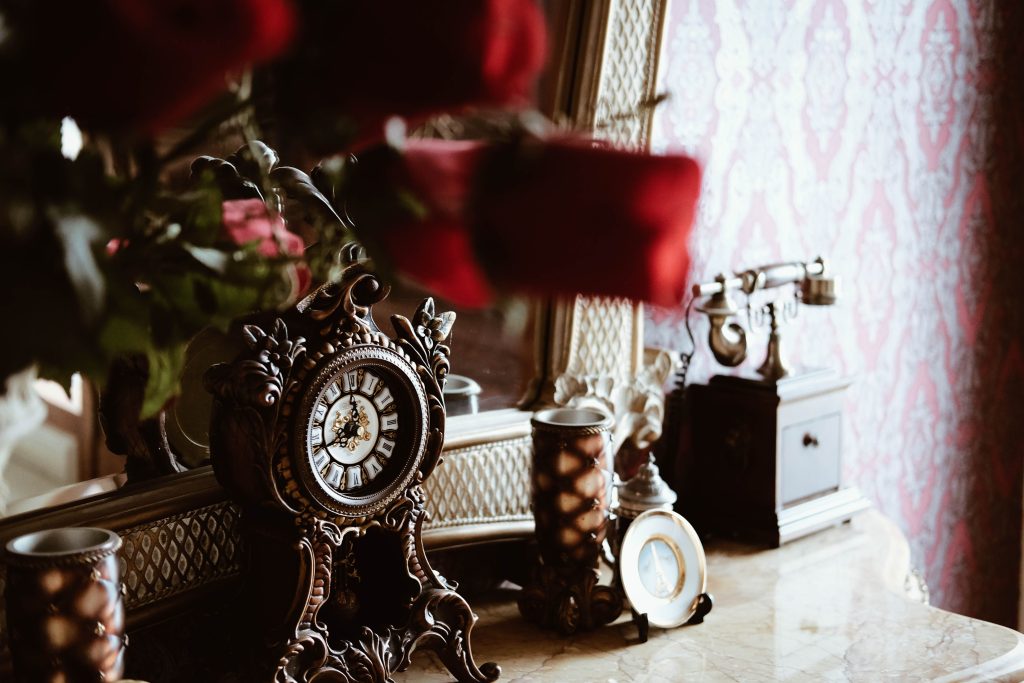
An ornament is a decorative object chosen primarily for its appearance, although some serve a useful purpose. Think of a mantel clock, sculptural bowl, miniature vase, or ornate picture frame. In decorating, vintage usually describes an item from an earlier period, while vintage-inspired describes a newer product borrowing its style.
A newer metal candlestick with a traditional silhouette may be better for regular use than a fragile original. If you simply love the look, reproductions can provide it without the complications of collecting antiques.
Types of Vintage Home Ornaments Worth Buying
Start with the surfaces or walls you actually want to decorate. Small brass or glass candlesticks make good tabletop accents, while ceramic bud vases suit bookshelves and bedside tables. Decorative bowls can organize keys or display dried natural elements, and framed prints give a blank wall a distinct period feel.
For a stronger focal point, consider a statement mirror or larger sculptural object. Choose contrasting heights and shapes rather than multiple similar curiosities.
Choose a Period Style That Suits Your Room
Victorian-inspired ornaments often feature elaborate curves, floral details, and dark or gilded finishes. Art Deco accents favor geometric lines, symmetry, and polished surfaces. Midcentury objects tend toward cleaner silhouettes, colored glass, and organic forms, while cottage-style finds lean into botanical prints, soft colors, and painted ceramics.
A decorative Victorian-style frame can look striking above a simple modern console. Start by identifying one feature you love—perhaps amber glass or aged brass—and use it as a thread through your accessories. Let color or material connect contrasting styles.
Compare Materials, Finishes, and Durability
Material affects both appearance and maintenance. Solid brass can develop a patina, while brass-colored alloy provides a similar visual effect without being the same material. Glazed ceramic is easy to dust but vulnerable to chips. Glass reflects light beautifully, although thin rims and delicate stems require careful handling.
Resin ornaments can reproduce intricate shapes, but their finish and weight vary. Inspect images for seams, unstable bases, and finishes mislabeled as solid brass. Buy for the actual construction, not just the styling photograph.
Decide Between Genuine Vintage and Reproductions
Choose genuine vintage if you enjoy searching for one-off pieces, distinctive wear, or the possibility of learning an object’s history. Expect variation in condition, availability, and dimensions. Confirm age through marks or records when possible.
Choose vintage-inspired reproductions when you need matching pairs, consistent sizing, or an easily replaceable accent. They can be especially practical for rentals and busy households. A carefully chosen reproduction next to an inherited vase often looks more convincing than a shelf packed with newly distressed objects pretending to be antiques.
Where to Shop for Characterful Pieces
Find older objects at estate sales, thrift stores, flea markets, and antique dealers. For valuable purchases, request photographs of markings and documentation of any claimed origin.
Online stores offer more predictable searches for particular styles and sizes, especially if you want coordinated candlesticks or framed art. Read material details and return conditions before ordering. For broader decorating inspiration, our guide to vintage home accessories explores how different accent pieces contribute to a welcoming, collected interior.
Inspect Condition Before You Commit
A little wear can look attractive; structural damage is another matter. Check ceramic pieces for hairline cracks, repairs, and chips around rims. Look for corrosion or loose joints on metal ornaments, and examine mirrors for damaged backing, insecure frames, or unclear hanging hardware.
For older painted pieces, do not assume a finish is safe to sand or handle roughly. Avoid using unknown vintage ceramics for food or drink unless their suitability has been established. Ask for measurements and close-ups of damage and markings. Skip costly pieces lacking reliable details.
Get the Scale Right for Shelves and Tables
Measure the intended location before falling for an ornate object. A tall vase needs space above it; an entryway bowl should leave enough room for keys and everyday movement. On a narrow shelf, consider both depth and how far an object’s base extends toward the edge.
Use objects of different heights and leave enough open space between them. For mirrors, check weight, hardware, and the reflected view. An attractive frame cannot compensate for an awkward fit.
Recommended Vintage Home Ornaments for Different Spaces
These five options suit different rooms and decorating needs.
Romadedi Gold Candlestick Candle Holders, Brass Color, Pack of 2
Best for: A subtle vintage accent on narrow mantels and dining tables.
These short alloy candlesticks have a brushed brass-colored finish and floral detailing inspired by traditional designs. Their compact design works beside books or frames. They accept approximately 0.87-inch taper candles; check the fit and keep flames away from nearby decor.
Sullivans Bud Vases, Distressed White Ceramic Set of 3 (CM2583)
Best for: Beginners arranging small shelves, side tables, and entryways.
This set combines three petite ceramic vases in a distressed off-white finish. They create a coordinated arrangement without additional shopping. Try them with dried stems or displayed empty. The intentionally worn finish is decorative rather than evidence of age, and ceramic still needs protection from knocks.
Mela Artisans Premium Scalloped Acacia Bowl, Natural Finish, 8-Inch
Best for: Warm, functional vintage-inspired styling on counters and consoles.
Hand-finished acacia wood and a sculpted scalloped edge make this compact bowl useful as both a decorative object and a catchall. Its eight-inch width suits smaller counters. Wood grain and coloring naturally vary; avoid leaving wet objects inside and follow the maker’s care guidance.
QKX Flower Oval Wall Art, Green Gingham, 7 x 10 Inches
Best for: Filling a small cottage-style wall or gallery-wall gap.
This lightweight oval botanical wall accent pairs a green gingham look with nostalgic floral imagery. Its small format suits a hallway, powder room, or grouped gallery arrangement where a large print would feel excessive. Its cottagecore style will not suit every interior.
Kate and Laurel Arendahl Glam Arched Tall Panel Mirror, 24 x 42 Inches, Gold
Best for: A dramatic traditional focal point above furniture or on a wall.
An arched silhouette and ornate garland-inspired crown give this large mirror a Baroque-influenced appearance. The listed design includes metal framing and attached D-ring hangers, making it a striking choice where wall space permits. Measure carefully and install securely; it needs generous wall space.
Style Vintage Accents Without Making Rooms Feel Cluttered
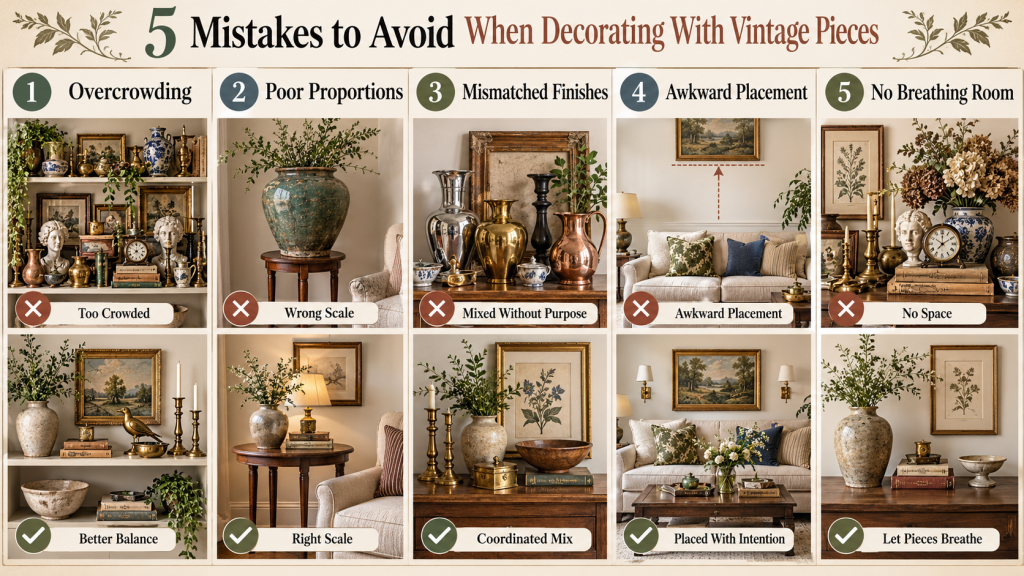
Give each display a clear focal point. On a mantel, try a mirror behind two low candlesticks, leaving portions of the surface open. On a bookshelf, alternate upright books, a ceramic vase, and a small framed piece instead of lining every shelf with ornaments.
Echo one material across a room, such as matching brass accents. Contrast matters too. Curved vintage forms feel especially expressive beside modern straight-edged furniture. Step back and remove objects that make the arrangement busy.
Set a Sensible Budget and Compare Value
Decide first whether you are purchasing appearance, function, or collectibility. For decorative reproductions, compare materials, dimensions, finish quality, and return terms rather than relying on a “vintage” label. For older finds, factor in cleaning, replacement hardware, or professional restoration when necessary.
Spend more on a prominent object you expect to keep, such as an ornate mirror, and less on interchangeable shelf accents. Buy gradually to avoid mismatched impulse purchases. One useful bowl may beat several unnecessary figurines.
Avoid These Common Buying and Styling Mistakes
Buying from photographs alone is risky when size is unclear; always check dimensions against your space. Do not mistake artificial distressing for genuine age, or assume every object described as “antique gold” contains real gold or brass. And resist covering every available surface with matching vintage accessories.
Keep delicate glass away from busy edges, verify how heavy wall pieces hang, and leave room for lamps, books, and other essentials. The best purchase is one you can display safely, maintain realistically, and still enjoy after the initial novelty passes.
What Conservation Guidance Says About Protecting Older Decor
Preservation advice is more useful here than claims about whether vintage objects are psychologically superior. The Smithsonian Institution’s guidance on preserving family treasures recommends avoiding direct light, large temperature changes, and aggressive cleaning for vulnerable materials. Its advice matters especially for original photographs, fragile fabrics, and painted objects.
The Smithsonian Museum Conservation Institute’s textile-storage guidance, updated in 2019, also emphasizes protective storage, suitable materials, and attention to humidity. These rules primarily concern preserving originals. In practice, place delicate heirlooms away from sunny windows and heat vents, dust carefully, and seek qualified conservation advice before attempting significant restoration.
Frequently Asked Questions About Vintage Home Ornaments
Are vintage and antique home ornaments the same thing?
No. Both describe older objects, but “antique” is often used in the trade for considerably older items, commonly those around a century old or more. The term “vintage” covers a wider range and does not have a strict definition. A newly made historic-style vase is a reproduction. Always read the actual age claim rather than relying on a decorative label.
Which vintage ornaments work best in small apartments?
Bud vases, short candlesticks, compact bowls, and modestly sized framed art are easy starting points. Choose one or two surfaces rather than scattering accessories throughout the apartment. Wall art saves shelf space, provided it hangs securely. Prioritize useful objects, especially an entryway catchall or a small vase that can be moved between rooms.
Can vintage ornaments work with modern furniture?
Yes. A curved brass-colored candlestick can soften a modern rectangular coffee table, while an ornate mirror adds contrast above a clean-lined dresser. The simplest approach is to repeat one color or finish, then vary the silhouettes. A little contrast gives individual pieces room to stand out without turning the whole space into a period set.
How can I tell whether a vintage-looking ornament is valuable?
Look for identifiable maker marks, credible provenance, uncommon design details, and condition consistent with the claimed age. Compare completed sales of genuinely similar pieces, not ambitious asking prices. Reproduction labels and decorative patina do not prove age or rarity. If the possible value is substantial, consult a reputable specialist before cleaning, repairing, or paying a collector-level price.
Should I use old decorative bowls for food or flowers?
Only when their materials and intended use are clear. Unknown vintage ceramics may have unsuitable glazes, while cracked containers can leak or deteriorate. A liner or separate modern vessel may allow flowers to be displayed without soaking an older piece, provided moisture cannot reach it. For food, choose items confirmed appropriate for food contact rather than making assumptions based on appearance.
Final Thoughts: Choosing Vintage Ornaments That Last
The most appealing vintage home ornaments are not necessarily the oldest, most elaborate, or most expensive. They are the objects that suit your room’s proportions, complement what you already own, and fit the way you live. Decide whether you want a genuine collectible or a traditional look, then examine materials, condition, and maintenance before purchasing.
For an easy beginning, the Sullivans ceramic vase set creates a flexible small display. If you want a bigger visual statement, the Kate and Laurel Arendahl mirror offers a more dramatic direction, provided it fits your wall and can be securely mounted. Start with one meaningful accent, arrange it thoughtfully, and add other pieces only when they genuinely improve the room.