Luxurious Home Decor: How to Create a High-End Look That Feels Personal
We may earn a commission for purchases made using our links. Please see our disclosure for more details.
A polished home should feel inviting, not staged. Yet that balance is difficult to create by simply buying expensive-looking accessories. The strongest luxurious home decor comes from proportion, lighting, texture, restraint, and pieces that genuinely suit the way you live.
This guide will help you decide where to spend, where to save, which materials create visual depth, and which decorative pieces earn their place. You will also find product recommendations for different budgets and room types, plus research-backed guidance on lighting, indoor air, and nature-inspired design. The goal is to help you shop confidently and build a room that feels refined, comfortable, and personal.
Affiliate disclosure: This article contains product recommendations that may earn us a commission at no extra cost to you.
What Gives Luxurious Home Decor Its Expensive Look?
Luxury is less about price than visual intention. A room feels elevated when furniture fits the space, materials relate, lighting is considered, and accessories have breathing room.
Think of a well-tailored jacket: fabric matters, but fit makes the difference. A modest lamp can look sophisticated on a correctly sized console, while an expensive sculpture can feel awkward on a crowded shelf.
For luxurious home decor, ask whether each purchase improves proportion, function, or atmosphere. If not, it may simply add clutter.
Start With a Cohesive Color Story
A restrained palette makes affordable and premium pieces easier to mix. Choose a main neutral, a secondary tone, and one or two accents to repeat through art, textiles, or metal.
Olive, aubergine, rust, navy, chocolate, and muted rose can all feel rich when used deliberately, so luxury need not mean beige.
View and compare samples in both morning and evening light. Undertones shift, and colors that looked perfect online may behave differently in your room.
Invest in Scale Before Small Accessories
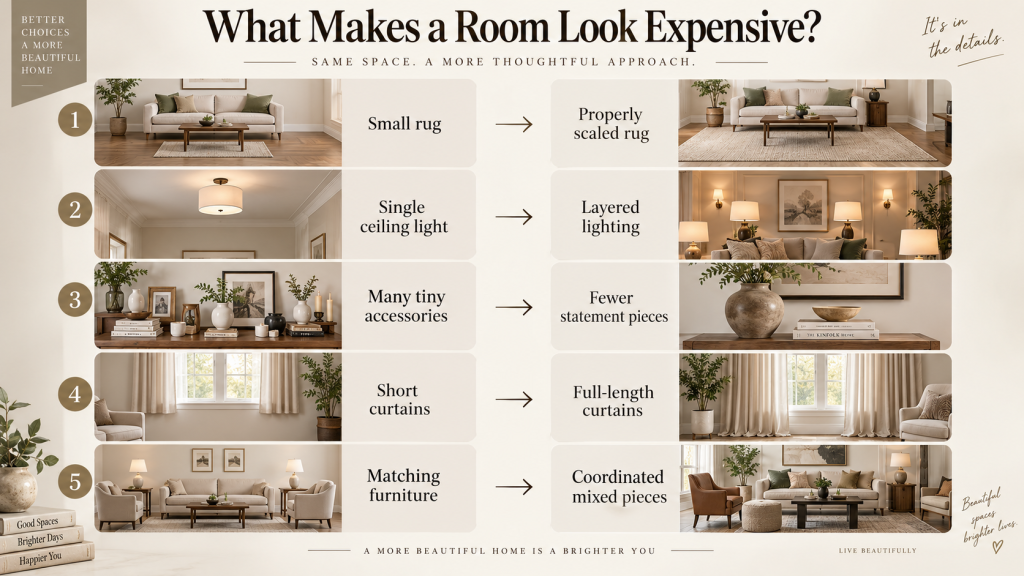
One generously scaled object often creates more impact than many small ones. A large rug, substantial mirror, lamp, or appropriately sized artwork gives the eye somewhere to rest.
Measure before shopping. Rugs should connect with seating, artwork should relate to the furniture below, and lamps need enough presence to balance their surfaces.
When scale is right, luxurious home decor feels calm. Too many undersized objects make rooms look busy.
Layer Lighting for Luxurious Home Decor
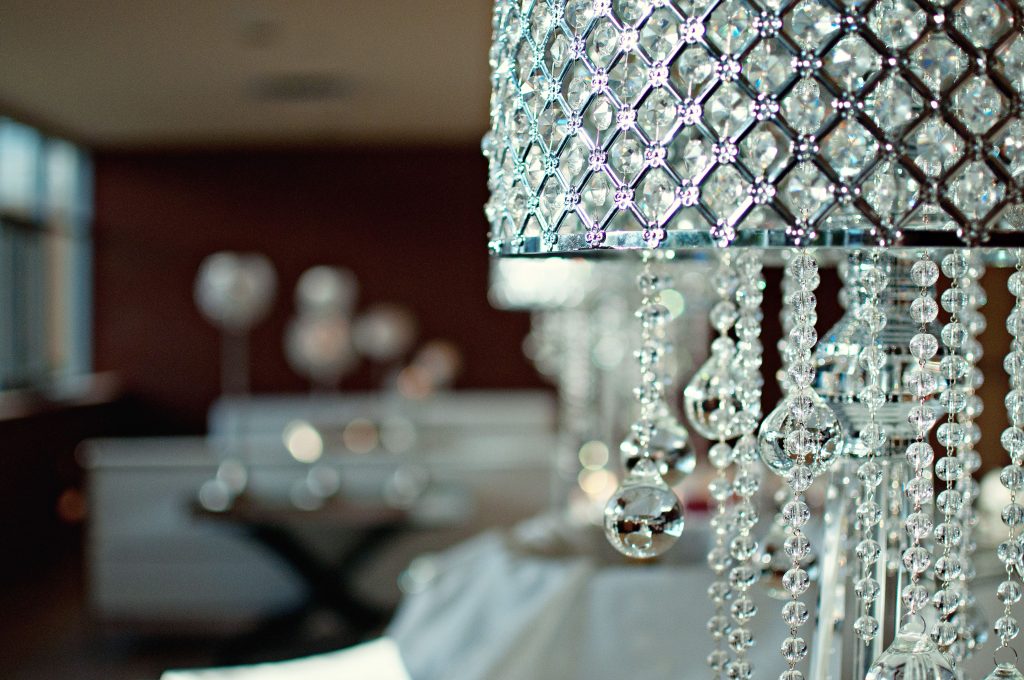
Overhead lighting alone can make a room feel flat. Layer ambient light for general visibility, task light for reading, and accent light for artwork or architectural details.
Table and floor lamps bring light down to human level, while dimmers add control from daytime activity to evening relaxation.
For a refined result, repeat one or two finishes instead of matching every fixture. Brass, black metal, ceramic, and glass can coexist when surrounding colors connect them.
Use Texture to Create Depth
Texture gives luxurious home decor depth without requiring more color. Mix matte pottery, brushed metal, woven linen, smooth stone, wood grain, glass, or plush textiles.
Contrast matters. A soft sofa benefits from stone or metal; hard flooring and bare walls often feel better with curtains, a rug, or a tactile throw.
Keep supporting pieces quiet. If every object demands attention, the room loses hierarchy.
Choose Materials That Age Gracefully
Natural stone, wood, wool, linen, ceramic, glass, and quality metals can develop character, but natural does not automatically mean practical.
Marble may etch, wood can mark, wool needs suitable cleaning, and brass may patinate. Those changes charm some people and irritate others.
Check care instructions before buying. Luxurious home decor should suit your habits; an object you are afraid to touch is rarely a good long-term purchase.
Make Windows Look Intentional
Windows affect height, softness, privacy, and light. Panels hung wider than the glass can make a window feel more substantial, while the right length creates a cleaner line.
Fabric changes the mood: linen blends feel airy, velvet adds weight, and lined panels add body and light control.
If you are comparing fabrics, lengths, and hanging styles, these living room curtain ideas can help you choose a treatment that belongs in the room.
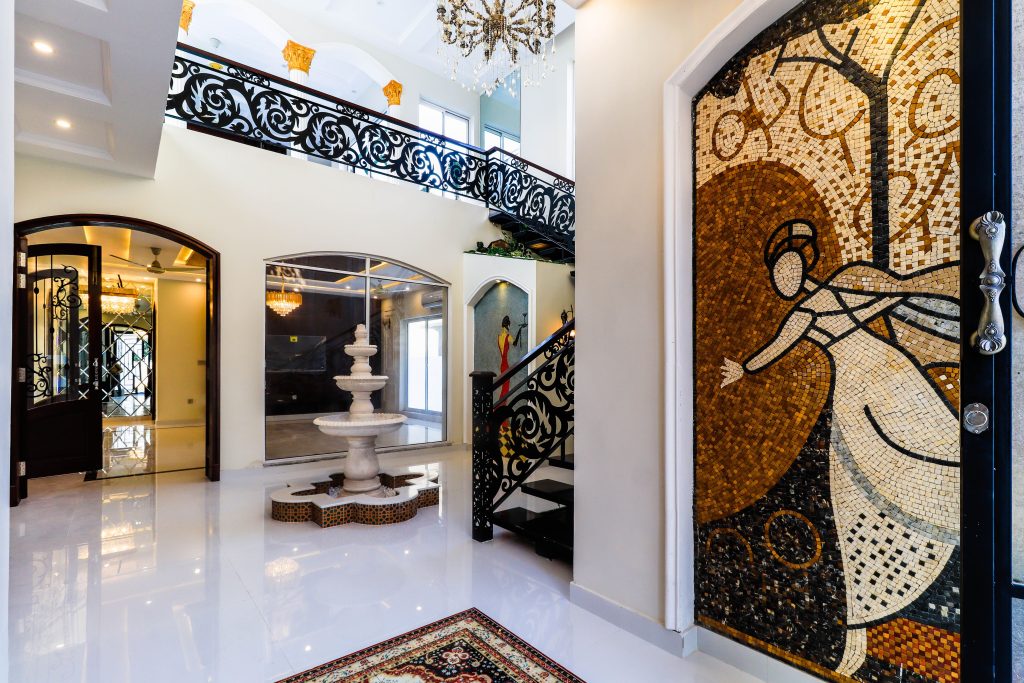
Style Surfaces With Restraint
Coffee tables, consoles, and shelves look more refined when edited. Start with fewer objects, then vary height, shape, and material.
Try books, one sculptural object, and a bowl on a coffee table; a console may need only a lamp and one larger accent. Negative space matters because it allows special pieces to register rather than disappear into visual noise.
Personal objects keep luxurious home decor from feeling generic. Travel finds, photographs, art, or handmade ceramics add character that cannot be recreated with a matching accessory set.
Recommended Products for Luxurious Home Decor
The best accessories solve different problems. These five choices cover flooring, lighting, softness, natural stone, and small-scale styling, giving you options for different budgets, rooms, and priorities.
| Product | Best for | Key feature | Consideration |
| SAFAVIEH Adirondack Area Rug | Anchoring a room | Large-scale trellis pattern | Synthetic construction |
| Ziqqeelam Gold Touch Control Table Lamp | Small-space lighting | Compact touch-controlled lamp | Petite for broad consoles |
| Bedsure Fluffy Bubble Faux Fur Throw | Adding softness | Deep textured surface | May feel warm in hot rooms |
| Creative Co-Op White Marble Cheese Board | Stone accent styling | Natural marble | Requires careful handling |
| Sullivans Bud Vases CM2583 | Budget-friendly styling | Coordinated ceramic grouping | Rustic finish is style-specific |
SAFAVIEH Adirondack Collection Area Rug – 6′ Square, Silver & Charcoal, Modern Trellis Design, Non-Shedding & Easy Care
Best for: Creating a strong visual foundation in a living area
This synthetic rug uses a silver-and-charcoal trellis pattern to give a seating zone more structure without demanding bold color. It suits renters or busy households wanting a decorative anchor with straightforward care. The square format works especially well in compact or symmetrical layouts, although shoppers who strongly prefer natural fibers may want wool or jute instead.
Ziqqeelam Gold Touch Control Table Lamp, Pleated Table Lamp, Brass Gold Bedroom Lamps for Nightstand, Small Scalloped Lamp Shade Table Lamps for Small Spaces for Bedroom, Living Room
Best for: Small bedrooms, side tables, and compact apartments
This lamp combines a brass-gold metal base, pleated shade, touch control, and E26 bulb base in an 11.81-by-11.81-by-13.77-inch form. Its small footprint provides decorative lighting without taking over a side table. Because it is petite, however, it can look undersized on a wide console or large bedside chest.
Bedsure Fluffy Bubble Faux Fur Throw Blanket, 50″ x 60″, Tie-dye Taupe
Best for: Adding tactile richness without replacing furniture
This polyester throw uses a pronounced bubble texture and faux-fur finish to soften plain upholstery or bedding. The taupe tone works easily with many neutral schemes, while the 50-by-60-inch size suits a sofa or reading chair. Its dense, plush appearance feels cozy, although it may be visually or physically heavy in very warm rooms.
Creative Co-Op White Marble Cheese Board with Scalloped Edge, Large
Best for: Adding a natural-stone accent to tables and consoles
Made from white marble, this scalloped board can act as a decorative base for candles, a vase, or small objects when it is not used for serving. Natural stone brings variation and depth that faux finishes often miss. Marble can mark or etch, though, so it requires more thoughtful handling than resin or ceramic.
Sullivans Bud Vases, Farmhouse, Mantle & Shelf Decor, Petite Boho Vases, Rustic Decor for Your Home (CM2583)
Best for: Finishing shelves and tables on a modest budget
This coordinated ceramic vase set uses distressed white finishes and varied heights for flowers, greenery, or empty arrangements. Because the pieces already relate to one another, they simplify shelf styling without requiring several separate purchases. The intentionally weathered finish fits relaxed, farmhouse, or transitional interiors better than sleek, ultra-modern luxurious home decor.
How to Shop Without Overspending
Set a spending hierarchy before browsing. Put more budget toward seating, rugs, lighting, window treatments, and storage; spend less on seasonal accessories and small decorative fillers.
Mixing price points often looks more natural than making every object appear expensive. A secondhand table can sit beside a new lamp, and a simple sofa can look richer with well-proportioned curtains, thoughtful lighting, and one distinctive piece of art.
Skip filler purchases. One deliberate addition often improves luxurious home decor more than several compromises you eventually replace. If you are uncertain, save the item and reconsider it after measuring the room.
Research-Backed Choices for a Better Home
Research supports several design choices beyond appearance. The Illuminating Engineering Society recommends thoughtful residential lighting based on comfort, visibility, and function, supporting the use of layered lighting instead of relying on one overhead fixture.
The U.S. Environmental Protection Agency also notes that some furnishings and building materials can release VOCs, so ventilation and careful material selection matter.
Meanwhile, a 2026 Frontiers review on biophilic design found promising links between natural elements, daylight, and wellbeing, although the evidence remains mixed. For luxurious home decor, this supports using good lighting, thoughtful materials, and natural elements for both beauty and comfort.
Common Mistakes That Make Luxury Look Forced
The quickest way to weaken luxurious home decor is to over-signal luxury. Too much shiny gold, faux marble, crystal, mirrored furniture, or obvious branding can compete for attention instead of creating refinement.
Matching furniture sets can also flatten a room. Mixing shapes, materials, and periods usually creates more personality, provided you repeat a few colors or finishes to keep everything connected.
Finally, respect real life. A delicate pale chair is a poor choice if your household needs easy-clean surfaces. Practicality is part of good design, not the enemy of it.
Build Luxurious Home Decor Room by Room
In a living room, begin with the rug and seating plan, then add layered lighting and one focal object. In a bedroom, prioritize bedding texture, bedside lighting, curtains, and a calm palette.
An entry may need only a mirror, console, lamp, and tray. In a dining room, focus first on the table, lighting, and artwork rather than filling every corner.
With a limited budget, complete one visual zone at a time. A finished reading corner feels more intentional than five half-decorated rooms, and the slower approach gives you time to understand what the space actually needs.
Frequently Asked Questions About Luxurious Home Decor
How can I give my home a luxurious look without spending too much?
Focus on scale, lighting, curtains, and editing before buying more decor. One properly sized rug, substantial lamp, or better-hung curtain can change a room more than several small accessories. Choose a restrained palette, repeat finishes, and buy fewer pieces with stronger shapes or textures.
What colors make a home look more luxurious?
There is no single luxury palette. Warm whites, taupes, olive, navy, chocolate, burgundy, charcoal, and muted jewel tones can all look refined when repeated intentionally. What matters most is undertone harmony and proportion, so test colors in your actual light before committing.
Does luxurious home decor require real marble, brass, or wood?
No. Authentic materials can add depth and variation, but well-made alternatives may be more practical in rentals or busy households. Prioritize convincing texture, sensible proportions, durability, and care requirements rather than choosing a material only because it is traditionally associated with luxury.
How many decorative accessories should I put on a coffee table?
Use enough to create interest without blocking daily life. For many tables, two to four grouped elements work well—perhaps books, a bowl, a small vase, or one sculptural object. The exact number matters less than varied height, balanced scale, and visible negative space.
What should I buy first when upgrading luxurious home decor?
Buy the item that fixes the room’s biggest weakness. If it feels bare, consider a rug or curtains. If it feels flat, improve lighting. If it feels cluttered, buy nothing until you edit and improve storage. The best first purchase solves a real design problem rather than simply adding another accessory.
Final Recommendation: Create Luxury That Feels Like You
The most convincing luxurious home decor is rarely the room with the highest spending total. It is the room where scale, lighting, texture, color, and personal meaning work together. Measure carefully, invest where daily use justifies it, and let smaller accessories support the larger composition.
For a quick update, the Ziqqeelam lamp adds layered light, while the Creative Co-Op marble board introduces natural stone without changing furniture. If the whole room lacks structure, a larger rug may be the stronger first move.
Choose pieces slowly, keep function in the conversation, and leave breathing room for things you genuinely love. That is the clearest route to a polished home that still feels like yours.